
AASP Summit 2026 Recap: Why Good Data is the Foundation for Everything in Advancement
This year’s AASP Summit confirmed something we've believed at LiveAlumni from day one: every AI tool, every engagement strategy, and every fundraising plan in advancement is only as strong as the data underneath it.
Our CEO and Co-Founder, Tatia Zuloaga, and Vanessa Carbonell, our Director of Customer Success, spent last week at the Summit. Below is a summary of what they learned, what we're all excited about, and the people who made the week special. It’s a recap for everyone who stopped by our booth, everyone who couldn't make it, and anyone thinking about how alumni data fits into their plans for 2027.
Thank you to the speakers and friends who made our week!


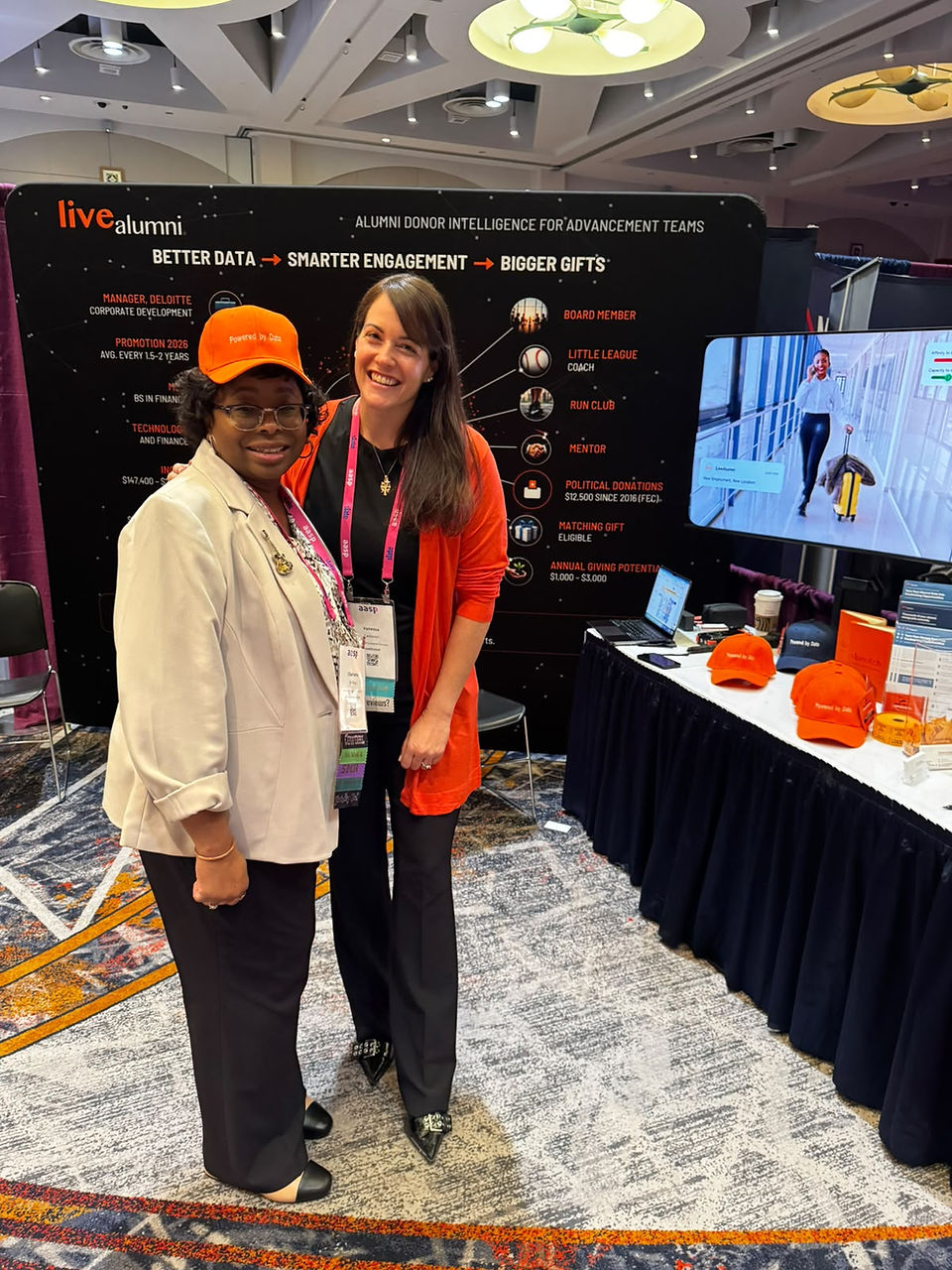


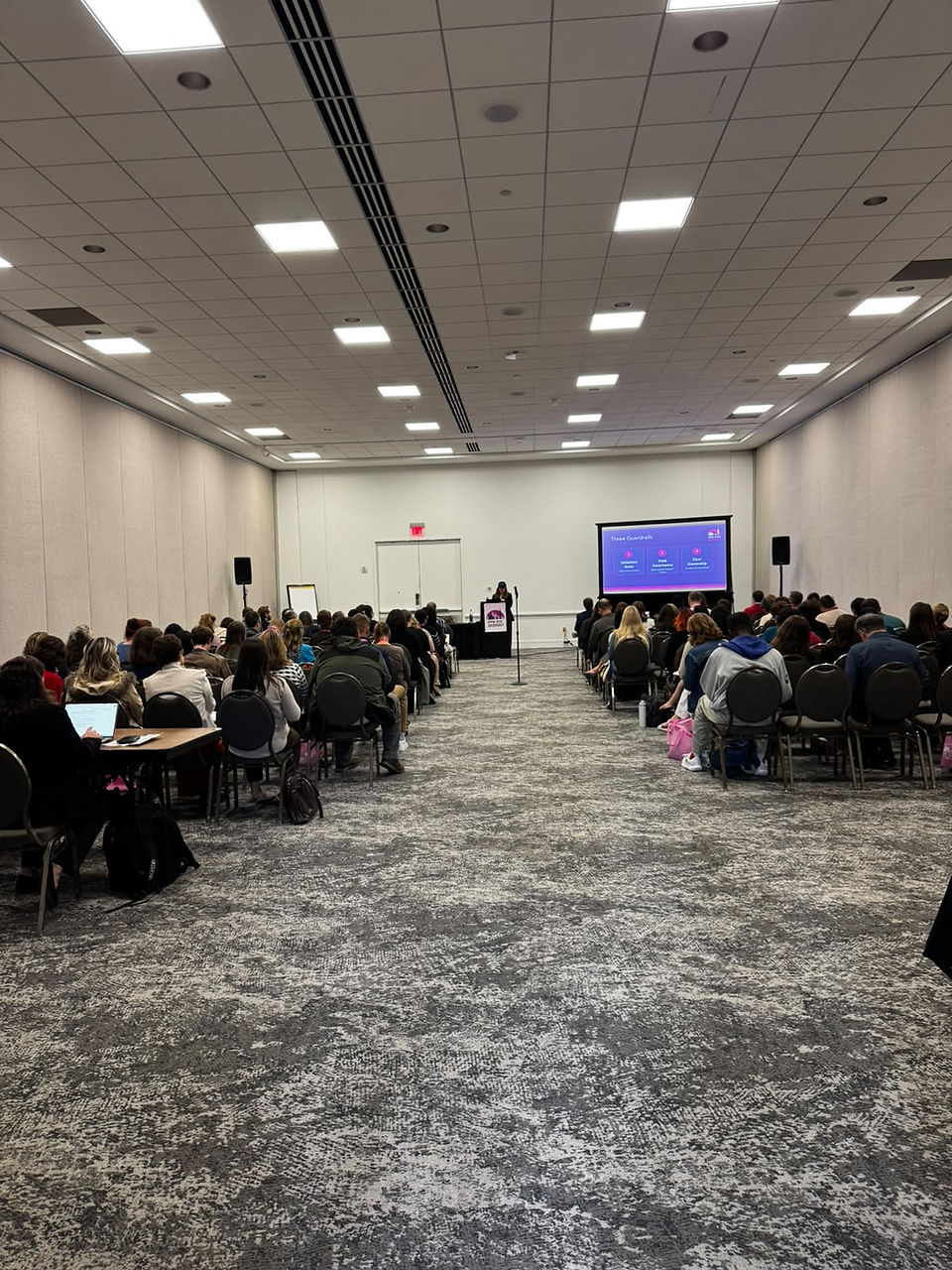
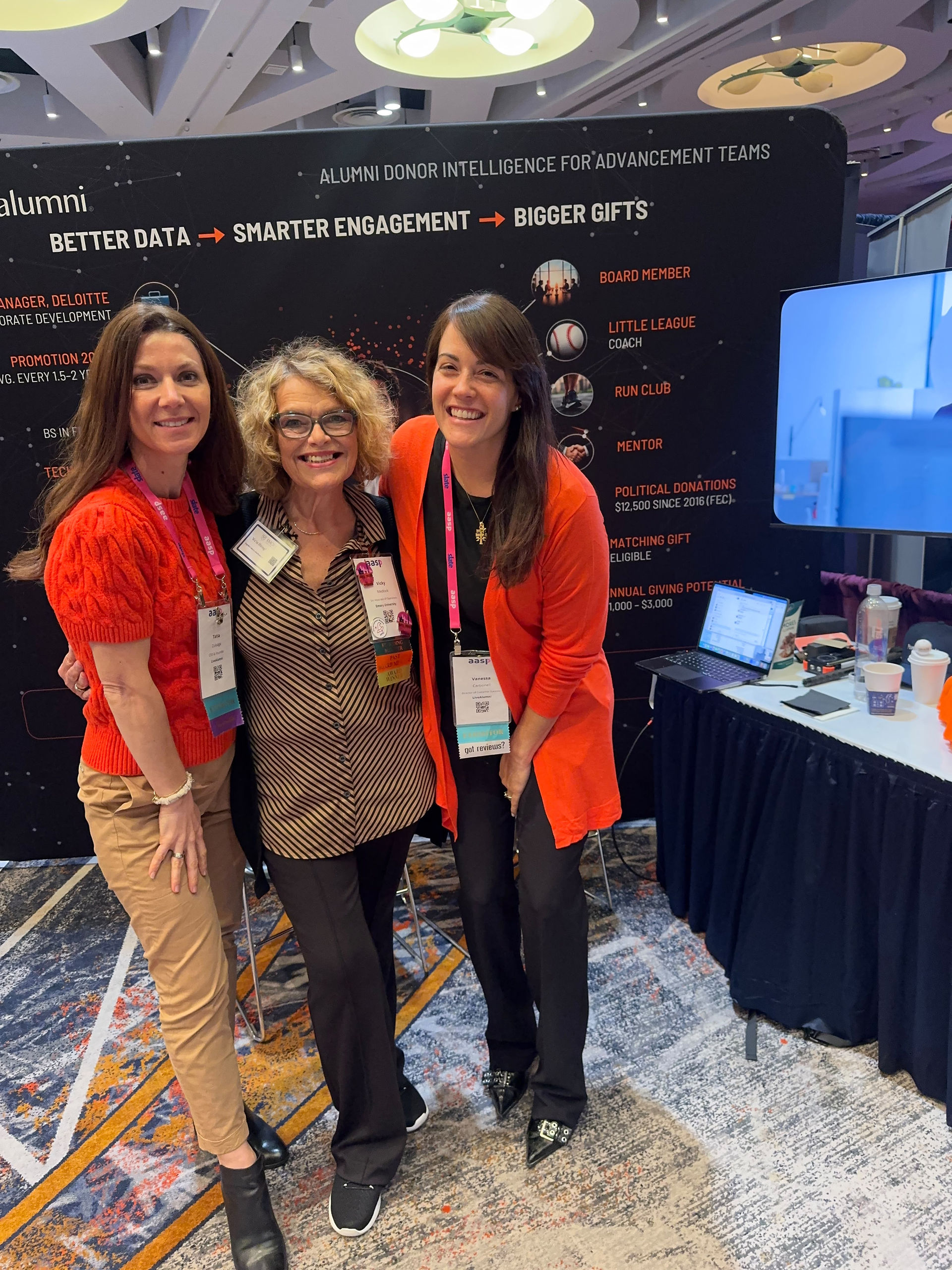


This Summit is the annual gathering of the people who keep advancement running behind the scenes. Here, professionals working in advancement operations, data governance, prospect research, gift processing, reporting, and CRM administration at colleges, universities, and nonprofits gather to compare notes on what's working, what's breaking, and what's coming next.
For LiveAlumni, with our 23-year history of providing alumni and donor data to higher education, there's no better room to be in.
Last week Tatia and Vanessa experienced great speakers, a thoughtful and engaged group of attendees, and an open, high-energy atmosphere from start to finish. It was well organized, full of good information, and a pleasure to be part of. A few people deserve a special thank you.
Ally Blasey, Loma Linda University Health for wearing the LiveAlumni hat while presenting her session and throughout the week. It was a really awesome moment for us!
Vicky Medlock from Emory University, for a great brainstorming conversation about alumni data and what comes next.
Carl Case and Preston Lundgreen from The University of Arizona Foundation, for giving LiveAlumni a shout-out during their talk. That meant a lot to our team.
Mark Walcott from The University of Houston who is also the outgoing AASP President, for reconnecting with us and talking through stewardship, goals, and engagement.
And to every customer, partner, and new friend who stopped by the booth: thank you. You made this one of our favorite events of the year.
Key takeaways from the AASP Summit 2026
AI can't fix bad data - and good data is the foundation for everything in advancement. AI works with the conditions that already exist, so messy data produces messy results.
Aiming for 97% accuracy that you can act on beats waiting for 100% accuracy that never arrives.
Some teams want employment data imported into their CRM. Others want fast access to it from a data warehouse. Both approaches are valid, and LiveAlumni is built to support either strategy.
CRM conversations were everywhere: integrations, new entrants, and a growing market for à la carte and white-glove CRM support.
The booth that never slowed down
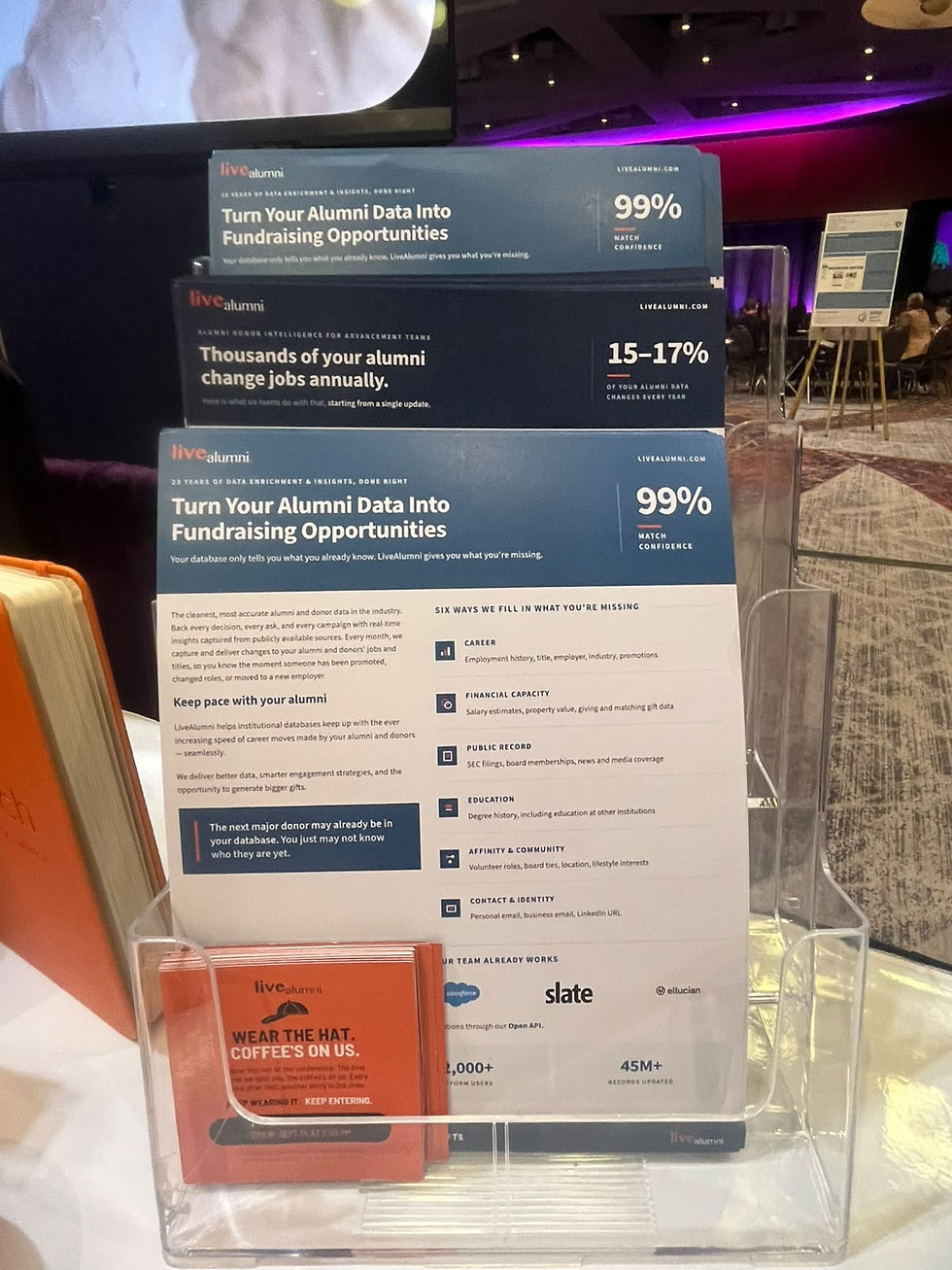
The turnout at the LiveAlumni booth was incredible. Long-term customers came by to catch up, share their successes, and tell us stories about how they're using LiveAlumni data on their campuses. Those conversations are the best part of any conference for us. Hearing a partner describe how updated employment data helped them find a prospect, reconnect with a lost alum, or clean up a portfolio reminds us why we do this work.
Just as exciting were the people meeting us for the first time. Many attendees stopped by to ask who we are and what we do, and we loved every one of those conversations. Some had heard our name from a colleague. Some had never heard of us at all. By the end of the week, a lot of new faces understood how LiveAlumni helps advancement teams keep alumni and donor records current, and we're looking forward to continuing those conversations.
Now for some details on those takeaways we mentioned.
1: Good data is the foundation for AI in advancement
AI was on everyone's mind at the AASP Summit 2026, and the message from the stage and the hallway was consistent. AI doesn't fix bad data. It amplifies whatever data it's given.
One of the keynotes that stood out came from Meena Das, founder of Namaste Data. Her session focused on messy data and how AI enters the conditions that already exist inside an organization. If your records are outdated, duplicated, or incomplete, an AI tool will build on those same flaws, only faster and at greater scale. That's exactly why keeping data updated matters more now than it ever has.
For advancement services professionals, this is both a warning and an opportunity. The teams that invest in data quality today are the ones that'll get real value out of AI tomorrow. Predictive models, automated outreach, prospect scoring, and personalized engagement all depend on knowing where alumni work, what they do, and how to reach them.
This is where LiveAlumni lives. Our platform gives institutions market-leading employment and profile data on their alumni so the systems they build on top of it, AI included, start from an accurate picture.
2: 97% accurate beats waiting for 100%
So what does good data actually look like? A theme we heard again and again was a healthy shift in mindset around data accuracy. Not every single record needs to be 100% perfect before a team can act on it. What matters is getting data to a level of accuracy that's reliable and useful, around 97%, and then putting it to work.
Chasing perfection can stall a data project for months. Meanwhile, alumni change jobs, move cities, and get promoted. By the time a team finishes perfecting a dataset, part of it's already out of date. Advancement teams that accept this reality and focus on high accuracy, high coverage, and frequent refreshes are getting further, faster.
We couldn't agree more. Alumni data is a living thing, and the goal isn't a frozen snapshot. It's a dependable, current view your team can trust enough to act on.
3: Import it or access it? Both approaches work
One of the most interesting conversations at the Summit was about where alumni employment data should live.
Some organizations told us their priority is getting all of that data into their CRM. They want every update imported so gift officers, researchers, and engagement teams see it in the system they already use every day.
Others shared a very different perspective. To them, data is a constantly changing beast, and the priority isn't having every field imported. It's having fast access to good employment data, within a few seconds, whenever they need it. These teams are comfortable keeping that data in a data warehouse and pulling from it on demand, rather than loading everything into the CRM.
We heard both perspectives clearly, and we think both are right for the teams that hold them. The best approach depends on your infrastructure, your staffing, and how your teams use data day to day.
It's worth noting that LiveAlumni can support either path. Whether you want updates flowing into your CRM or on-demand access alongside it for unlimited users, the goal is the same and we can help you get there: great data, regularly updated, available when you need it.
4: CRMs are powerful, and teams want more help getting value from them
CRMs came up in nearly every conversation. Attendees talked about the systems they use, the integrations they rely on, and how LiveAlumni data flows into their CRM.
A clear trend emerged. Modern advancement CRMs are huge. They're packed with functionality, and many teams struggle to get everything they can out of them. That gap is creating a growing market for à la carte and white-glove CRM support, and we were glad to see new companies entering the space to help institutions fill those needs. More support options mean more teams getting real value out of the systems they've already invested in.
For us, the Summit was also a chance to strengthen our relationships with the CRM partners we already work with. We learned about what they're building and implementing next, and we had valuable conversations about our upcoming integrations and APIs, which are launching very soon and which will make it even easier for institutions to connect LiveAlumni data to the systems and workflows they already use.
Listening to our customers: shaping LiveAlumni in 2027
Just as universities invest in listening to their alumni, we invest in listening to our clients. Some of the most valuable moments of the week were one-on-one conversations with customers about what they like, what they want to see next, where their pain points are, and how we can help.
That feedback is already shaping our work.
We recently launched a new Enhanced Monthly Employment Tracker so institutions receive changes more frequently and can act on them sooner. We also added Daily News which lets you keep up to date with your alumni and donors by monitoring the most reputable sources on the web for the latest news and articles on the people you care about.
In a world where data changes constantly and AI tools depend on current information, more updates like these matter more and more.
We believe 2027 will be a year of growth for LiveAlumni in how we support our clients, and we want you to help set the direction. Our account managers will be asking the same questions on every call: What are you liking? What would you like to see? That way, when we plan our roadmap, it reflects what advancement teams really need.
If you have any thoughts at all, please share them by filling out this short feedback form on the data and services you're actually interested in. It only takes a few minutes, and our team reads every response.
Powered by data

We left the AASP Summit 2026 more motivated than ever. It was a wonderful opportunity to catch up with long-standing clients, meet organizations that are newly interested in LiveAlumni, and learn from the people who keep advancement running.
Most of all, the week confirmed how vital good alumni data has become. "Powered by data" isn't just the LiveAlumni motto. It felt like the motto of the whole conference.
Organizations increasingly understand that data work goes beyond updating a database. It's about turning information into actionable insight that helps them build stronger relationships with their alumni and constituents. Seeing the impact of the data we provide, and the relationships we've built with our partners, is exactly what keeps us innovating.
Thank you again to AASP, to every speaker, and to everyone who visited our booth. We'll see you next year, hats on.
Want to see how LiveAlumni can help your team keep alumni data current and ready for AI?
Frequently asked questions
What were the biggest themes at the AASP Summit 2026?
The biggest themes were data quality as the foundation for AI, a practical approach to data accuracy, the choice between importing data into a CRM or accessing it from a data warehouse, CRM integration and support.
Why does data quality matter for AI in advancement?
AI tools work with the data that already exists in your systems. If alumni and donor records are outdated or duplicated, AI will reproduce those problems at scale. Current, accurate data, especially employment data, is what allows AI to deliver useful insights for prospect research, engagement, and fundraising.
Does alumni employment data need to be imported into the CRM?
Not necessarily. Some institutions prefer importing updates into their CRM, while others keep data in a warehouse and access it on demand. LiveAlumni supports both approaches.
How does LiveAlumni help advancement services teams?
LiveAlumni provides current alumni and donor data, including employment and career information, so advancement teams can keep records up to date, find and reconnect with alumni, and turn data into actionable insight. With monthly updates and an upcoming API, it's designed to fit into the systems teams already use.
How can I share feedback with LiveAlumni?
Fill out this short feedback form or reach out to your account manager if you're a customer. We want to hear what you like, what you want to see, and where we can help.


